Rebound uniformity
Evaluate surface response across the playing field, not at a single convenient test point.
Specify competition tables, outdoor platforms, blades, rubbers, rackets and service parts around measurable rebound, consistent handling and the operating realities of your venue.
Six engineering checkpoints
Our project reviews connect playing characteristics with duty cycle, storage, environmental exposure and maintenance access.
Evaluate surface response across the playing field, not at a single convenient test point.
Match undercarriage stiffness, leveling range and caster geometry to repeated setup cycles.
Balance veneer orientation, carbon placement and handle geometry against the intended stroke profile.
Compare sponge hardness, topsheet grip and throw behavior instead of relying on speed labels alone.
Plan access to nets, wheels, locks and high-wear parts before equipment reaches the floor.
Separate indoor, sheltered and outdoor specifications using moisture, UV and storage conditions.
Specification navigator
Final values vary by model and market. Use these groups to build a procurement brief before requesting current technical sheets.
Application fit
Traffic, storage, supervision and climate determine the right table system more than a generic “commercial” label.
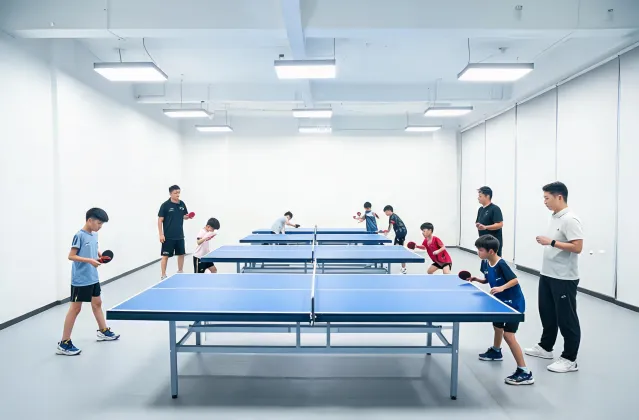
High rally volume, repeatable setup and player-level equipment segmentation.
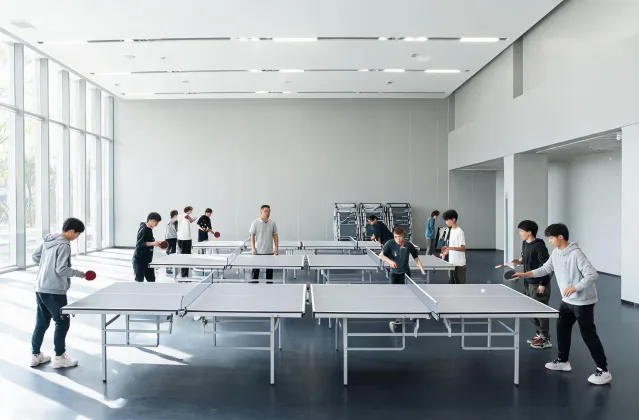
Mobile storage, intuitive locking and fleet-level inspection routines.
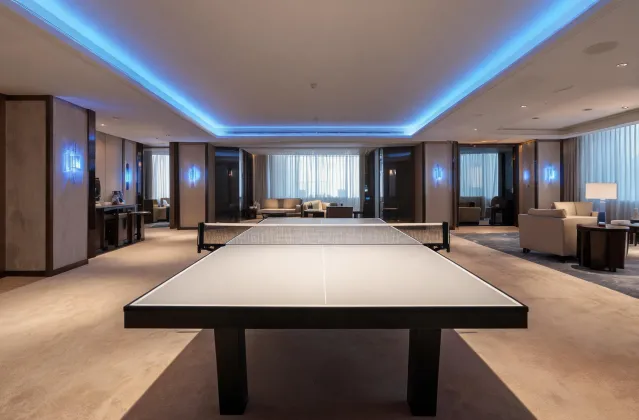
Guest-ready presentation, multi-skill accessibility and low-friction upkeep.
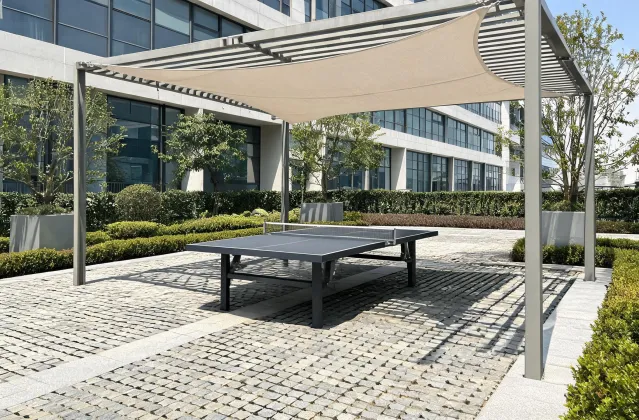
Exposure-aware surfaces, corrosion resistance and anchoring strategy.
Verification framework
Approval and compliance claims must be verified against the exact SKU, documentation revision and country of delivery.
Project controls

From floor plan to first serve
Share room dimensions, user profile, daily play pattern, storage route and delivery market. We will organize the questions your procurement team should resolve.
Start the specification review