Observe
Document stroke type, contact timing, recovery behavior, room conditions and the repeatability of the reported experience.
Player culture story
Equipment development gains meaning when laboratory measurements, production tolerances and player feedback can be traced to the same playing outcome.
From observation to requirement
Words such as fast, stable, crisp or controlled are useful inputs, but they must be translated into construction variables and repeatable comparisons before guiding a product decision.
Document stroke type, contact timing, recovery behavior, room conditions and the repeatability of the reported experience.
Connect the observation to blade layup, rubber response, table surface, frame behavior or equipment setup.
Repeat the comparison across samples and conditions, then retain the method and revision in the decision record.
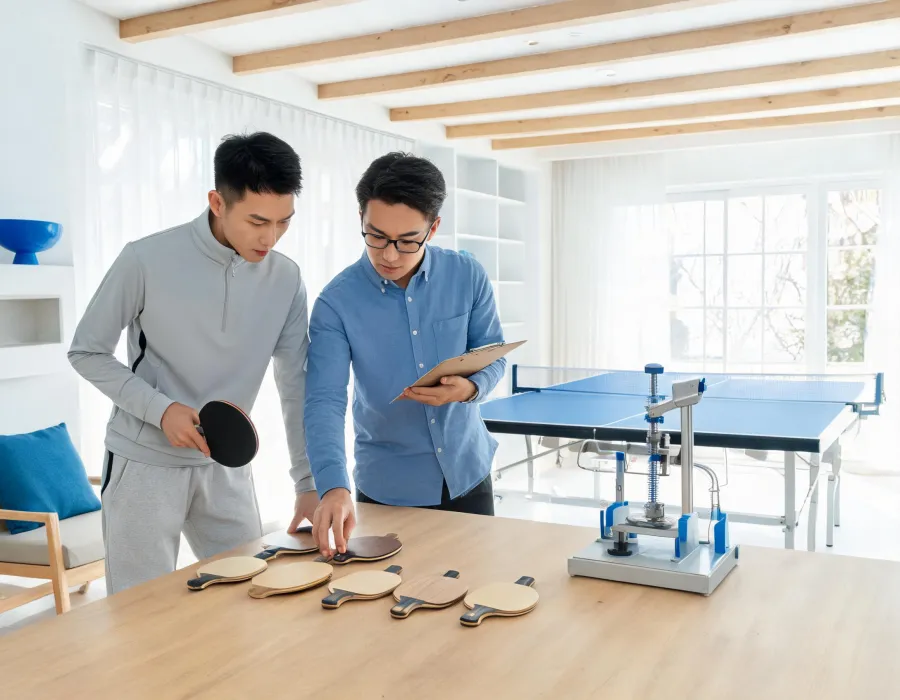
A shared language
A lively racket that suits a trained player may not fit a school lending fleet. A mobile table that simplifies storage may introduce different inspection needs from a fixed installation. Our culture treats those tradeoffs as design inputs rather than afterthoughts.
Decision timeline
Define the performance or facility problem in observable terms.
Hold relevant conditions constant and record the configuration under test.
Convert the selected behavior into material, process and tolerance controls.
Review real-use inspection data and feed findings into the next decision cycle.
Tell us the playing profile, venue conditions and equipment decision you are trying to resolve.
Explore the innovation method